


Repair or Replace Furniture?
Should you repair damaged furniture or replace it? The answer depends on the furniture’s quality, construction, condition, type of damage, sentimental or monetary value, and the cost of repair compared with replacement. All Furniture Services® can evaluate damaged furniture and help determine whether repair, restoration, reupholstery or replacement makes the most practical sense.
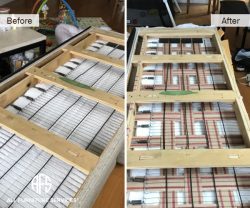
Many furniture problems that appear serious can be repaired without replacing the entire piece. Broken frames, damaged finishes, torn upholstery, worn leather, sagging cushions, defective mechanisms, missing parts and other problems may have several possible repair options.
Before replacing damaged furniture, find out what can be repaired.
Is Your Furniture Worth Repairing?
Furniture may be worth repairing when the underlying piece is well constructed, replacement would be expensive or difficult, the damage is limited to a repairable area, or the item has sentimental, antique or design value.
Before deciding, consider:
- Quality and construction: A solid, well-built frame may justify repair even when upholstery, finishes or components are damaged.
- Extent of damage: Localized damage can sometimes be repaired without replacing major portions of the furniture.
- Repair cost: Compare the realistic repair cost with the cost of purchasing and delivering a comparable replacement.
- Age and condition: Consider the overall condition of the piece, not only the immediately visible problem.
- Sentimental value: Family furniture, heirlooms and meaningful pieces may have value beyond their replacement cost.
- Availability: Custom, discontinued, matching or unusual furniture may be difficult to replace.
- Environmental impact: Repairing usable furniture can reduce unnecessary disposal and extend the life of the piece.
When Furniture Repair May Make More Sense
Repair can be especially practical when most of the furniture remains in good condition and the problem is concentrated in one component or area.
- Broken or loose furniture frames
- Broken legs, supports or structural components
- Scratches, gouges, chips and finish damage
- Loose joints
- Sagging seats or cushions
- Broken springs or webbing
- Torn or damaged upholstery
- Open seams and stitching
- Leather scratches, tears or discoloration
- Broken recliner or sleeper mechanisms
- Damaged or missing furniture parts
- Loose or damaged hardware
- Minor delivery or moving damage
For general repairs, visit our Furniture Repair & Restoration Services.
When Replacement May Be the Better Option
Repair is not automatically the best choice. Replacement may make more sense when extensive deterioration affects multiple parts of inexpensive furniture, the underlying structure is no longer suitable for repair, necessary components or materials cannot reasonably be obtained, or repair costs approach or exceed the value of an appropriate replacement.
The important comparison is not simply the original purchase price. Consider what it would cost today to purchase furniture of comparable quality, including delivery, assembly, removal and other replacement expenses.
Repair or Reupholster a Sofa or Chair?
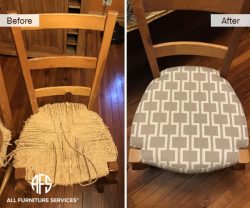
A worn or damaged sofa does not necessarily require complete reupholstery. A torn panel, open seam, damaged cushion or isolated upholstery problem may sometimes be repaired separately.
If the upholstery is extensively worn, the material is deteriorating throughout, or you want to completely change the appearance of the furniture, reupholstery may be the more appropriate option.
Learn more about our Furniture Upholstery & Reupholstery Services.
Repair or Refinish Wood Furniture?
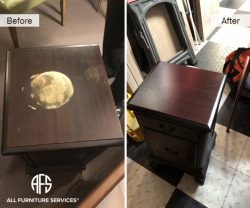
Scratches, dents, chips, water marks and other finish damage do not always require complete refinishing. Depending on the damage and existing finish, localized touch-up or finish repair may be sufficient.
When deterioration affects a larger area, the finish has significantly worn, or a complete color or appearance change is desired, refinishing may be considered.
Learn more about our Furniture Refinishing & Painting Services.
Repair or Replace Leather Furniture?
Scratched, faded, torn or discolored leather does not automatically mean the furniture needs to be replaced. Depending on the leather type and condition, damaged areas may be repaired, reinforced, color matched, re-dyed or replaced individually.
If the material has deteriorated extensively throughout the piece, partial or complete reupholstery may be a better solution.
See our Leather & Vinyl Furniture Repair Services for available repair and restoration options.
Should Antique Furniture Be Repaired or Restored?
Antique and collectible furniture should be evaluated differently from ordinary furniture. Age, construction, original materials, finishes, previous repairs, rarity and historical or sentimental value can all influence the appropriate approach.
More intervention is not always better. When preservation is important, the objective may be to stabilize or carefully restore the piece while retaining appropriate original materials and character.
For specialized work, visit our Antique Furniture & Art Restoration Services.
Can Broken Furniture Parts Be Repaired or Recreated?
A broken or missing component does not necessarily mean the entire piece must be replaced. Depending on the furniture and material, legs, supports, trim, moldings, hardware and other components may be repaired, reinforced, replaced or recreated.
Replacement parts may also be available from the original manufacturer or another compatible source. When a suitable part cannot be obtained, custom fabrication may sometimes be an option.
Furniture Can Sometimes Be Improved Instead of Replaced
Repair also creates an opportunity to improve or modify existing furniture. Depending on the piece, furniture may be resized, reinforced, reupholstered, refinished, repainted, repadded or modified to better suit its current use or space.
Furniture that cannot fit through a doorway, staircase or elevator may not need to be replaced either. Professional disassembly and reassembly can sometimes allow large sofas, sectionals, beds, armoires and other furniture to be moved through restricted spaces.
Commercial Furniture: Repair vs. Replacement
For hotels, restaurants, offices, medical facilities, retailers and other businesses, replacing furniture can involve more than the cost of the item itself. Freight, installation, downtime, matching existing furnishings and replacing multiple pieces can affect the decision.
Repairing, refinishing or reupholstering existing commercial furniture may be worth evaluating before purchasing replacements, particularly when the underlying furniture remains serviceable.
Learn more about our Commercial & Hospitality Furniture Services.
Get a Furniture Repair Evaluation Before Replacing It
You do not have to decide whether to repair or replace furniture without knowing the available options. Submit photos of the entire item and damaged areas below so the furniture and type of damage can be evaluated.
Depending on the situation, there may be several possible approaches ranging from a localized repair to restoration, refinishing, partial reupholstery, complete reupholstery or replacement.